What do we do with the vine cuttings after pruning? Chipping them in the vineyard makes sense
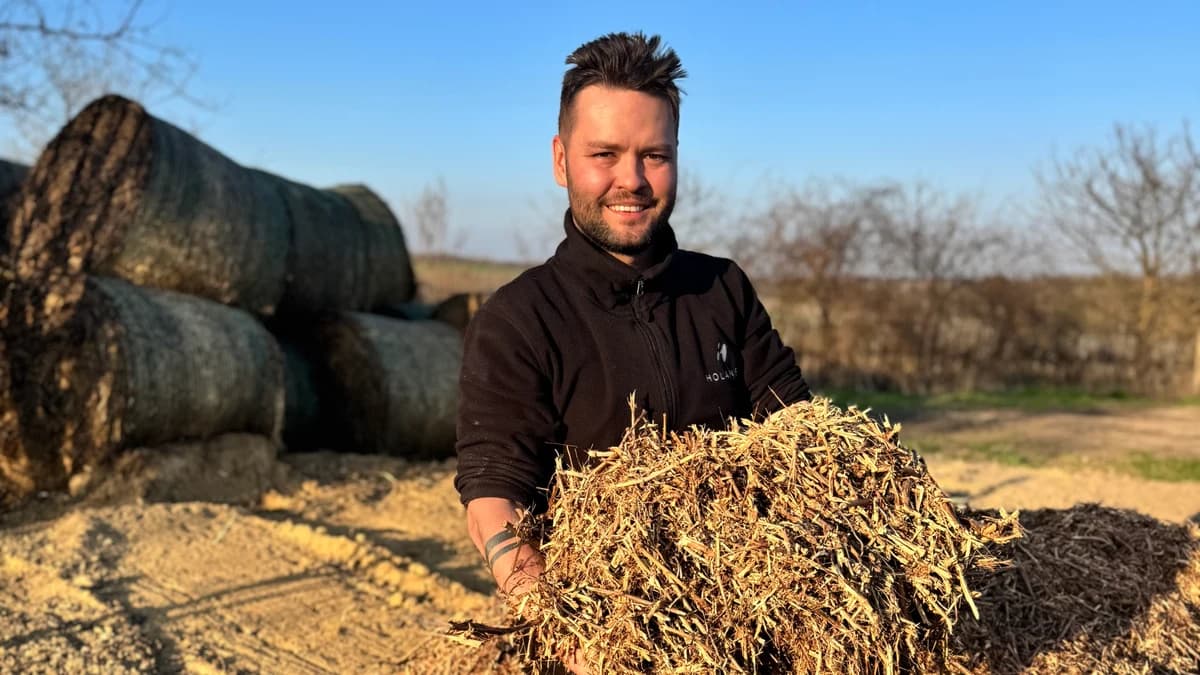
“Pruning waste can be a source of diseases and wood-decaying fungi, which can cause irreversible damage to the vineyard.”
Every year after winter pruning, a large amount of vine wood – known as prunings – remains in the vineyards. You might be wondering what to do with it.
Here at Holánek Winery, we’ve found a way to put it to good use – we chip it right there in the vineyard.
What exactly is vine prunings?
Prunings are the wood left over after pruning the vines. Every winegrower is familiar with them – the piles of canes between the rows that need to be dealt with.
Why not just use it as mulch?
The usual option is simply to shred the vine cuttings in a mulcher. But this is precisely where the problem arises.
Prunings can be:
- a source of disease spread
- a carrier of wood-decaying fungi
- a potential risk to the long-term health of the vineyard
These pathogens can gradually spread and, in extreme cases, cause irreversible damage to the vineyard.
👉 This is one reason why vine cuttings used to be routinely burnt. Today, they are often simply mulched, but we do not consider this an ideal solution – particularly if we want to keep the vineyard healthy in the long term.
How we prune
We use the following equipment:
- Fendt 210F tractor
- Berti Picker wood chipper
Vine pruning in the vineyard involves collecting the prunings from between the rows and then shredding them into wood chips on the spot.
Why we do it
1. Fuel
The resulting wood chips can be used as a source of energy – for example, for heating.
2. Natural fertilisation
Any wood chips not used as fuel are further processed into vermicompost:
- it gradually decomposes
- they are naturally transformed into high-quality compost
- at the same time, unwanted pathogens are eliminated
We then return the resulting compost to the vineyard:
- it enriches the soil with nutrients
- it improves its structure
- it supports the long-term vitality of the vineyards
👉 In this way, we return the very best to the soil – without the risk of disease and in its natural form.
Conclusion
We strive to do things meaningfully – that is, to farm with respect for nature and the health of the vineyards.
For us, pruning is one of the steps we take to return the vines to their natural cycle – back into the soil.
“What is created in the vineyard returns to it in its very best form.”
📣 Want to see what really goes on at the winery?
Follow us – every week we share a new update from the vineyard and the cellar.
👉 Watch the video below the article and take a look behind the scenes at the winery with us.